Sunday, November 26, 2006

Denmark's Speed-Control Bikini Bandits


The topless blonde women "are working", road safety officials say


Danish ad makes road safety sexy


This movie was made by the Danish Road Safety Council and aims to draw attention to speed signs and speed limits in Denmark. Despite a decrease in speed violations, 7 out of 10 Danes still exceed the speed limit on a regular basis. Respecting the speed limits is the simplest way to save lives.

Danish road safety officials have come up with a novel way of warning motorists about the dangers of speeding - by using topless blonde women.

They have produced a spoof news report where the blondes carry road signs showing the Danish speed limit: 50 km/h.

The video - posted on the web - is aimed at grabbing the attention of young male drivers, but feminists say they hate it.

Speeding has been blamed for 25% of road deaths in Denmark.

Julia Pauli of the Danish road safety council told the BBC that the reaction to the Speedbandits video had been mostly positive.

"If you want to reach the young people, you have to communicate on their conditions... So, topless women are working," she said.

She said the advertising campaign had been tested and in the target group it was really positive - more than 50% said they were thinking more about the dangers of speeding when driving.

Asked if the council would consider using a man exposing his bottom to appeal to speeding women drivers, Ms Pauli said: "Maybe. We'll see."

Story from BBC NEWS:
http://news.bbc.co.uk/go/pr/fr/-/2/hi/europe/6181788.stm

Published: 2006/11/24 17:42:31 GMT

© BBC MMVI Legal Notice

Friday, November 24, 2006

Taoist Temple demolished in Penang

I didn't quite read the piece in Malaysia Kini about this issue because I can't read Chinese but got the gist of it looking at the photos.

I find this so sad. But Malay politicians ALWAYS play the religious card when they want to garner votes from their community.

And its not always about brandishing a keris and clamouring for Chinese blood. I was once in an UMNO meeting at PWTC where a Chief Minister was bragging about how he refused to permit Christians to build Churches in his State and how he blocked manoeuvres to acquire land to build temples for other religions. The way he was going on, he was trying to portray himself as some kind of (Malay/Muslim) hero.

Of course, me being me, I stood up and asked him point blank wouldn't it be better for society as a whole if we gave all the communities more places of worship? Wouldn't he rather have more God-fearing citizens? Wouldn't it be sad if people turned to crime or drugs because they missed out on some religious up-bringing because his government had denied the building of churches or temples?

His response was so idiotic and typical of the myopia Malay politicians possess that I won't bother to repeat it here. Suffice it to say, we do have some classic idiots in positions of power in Malaysia. That's the Real Malaysian Tragedy.

Copyright 2003-2006 Azlan Adnan Legal Notice

Thursday, November 23, 2006

Female circumcision 'un-Islamic'

Female circumcision has been attacked as painful and dangerous


Prevalence of Female Genital Mutilation
(darker shading denotes higher rates of FGM).

Egypt's top Muslim clerics have distanced Islam from the practice of female genital mutilation, saying the religion does not prescribe it.

The head of the al-Azhar mosque, Sunni Islam's top authority, told a conference in Cairo the practice, also known as female circumcision, was not a "must".

And Egypt's grand mufti, Ali Gomaa, said the Prophet Mohammad had not circumcised his daughters.

Female genital mutilation is widespread in parts of Africa and the Middle East.

The practice, which typically involves surgically removing the clitoris of a young girl, has been criticised as an infringement on the rights of women and a threat to their health.

Parents who support the practice argue that it helps prevent promiscuous behaviour in their daughters.

Genital mutilation or female circumcision often robs women of sensitivity in their sexual organs.

Muhammad Sayyid Tantawi, the top scholar at Cairo's al-Azhar mosque, told the conference: "From a religious point of view, I don't find anything that says that circumcision is a must [for women]."

"In Islam, circumcision is for men only," the Associated Press news agency quoted him as saying.

Ali Gomaa, Egypt's grand mufti, told the gathering no examples of the practice could be found in the Prophet Muhammad's life.

"The Prophet Muhammad didn't circumcise his [four] daughters," he said.

Another leading cleric, Sheikh Yusuf al-Qaradawi, said that Islam did not require the practice but some clerics felt it was allowed.

Widespread practice
Female genital mutilation is widespread in Egypt, Yemen, Oman and parts of sub-Saharan Africa.

It is relatively unknown in most other parts of the Muslim world, including south and south-east Asia, North Africa and Saudi Arabia.

The practice has been traced to Pharaonic times, pre-dating Islam.

Some Christian and animist groups in Africa also practice female genital mutilation.

Some ignorant parents who erroneously back the practice cite obscure Muslim scholars and doctors who allegedly claim it is necessary or religiously desirable to remove the clitoris of young girls.

Women's groups in Egypt have been campaigning against it for years, but they know that the fight to eradicate it will take many more. Many igronant Egyptian families still circumcise their daughters, even though this is not the first time top Muslim clerics have spoken out against the barbaric practice.

Ending Female Genital Mutilation?
Rights, medicalization, and the state of ongoing struggles to eliminate the FGM in Kenya

NAIROBI, KENYA -- Being a deep-rooted cultural practice for many communities in Kenya, no one assumed it would be an easy task to eradicate Female Genital Mutilation (FGM). For the first time in 1998, the Kenya Health and Demographic Survey included questions on FGM and found that 38 per cent of women had undergone the procedure. In 2003, the survey found that 34 per cent of women had undergone FGM, however in communities where FGM was almost universally practiced there was very little change. The slow rate of progress is discouraging to organizations that have been working on this issue for many years. Realizing just how much of a sustained and tailored effort FGM eradication campaigns require, international organizations and NGOs are trying to collaborate on research and intervention efforts to make greater inroads into eliminating this practice. At a conference held in Nairobi in December, UNICEF, Population Council and several other NGOs presented their latest research findings on FGM, with a particular focus on the Somali community in Kenya.

"How much longer?" said Abdi Abdullahi of National Focal Point at the conference. "There has been 80 years of campaigns and yet there's been little impact."

The papers presented at the conference showed many FGM intervention campaigns have had little to no impact, and some may have even contributed to further entrenching the practice.

FGM, female genital cutting or female circumcision, are the terms used to describe several types of mutilating operations performed to the external genitalia of girls and women. The types of procedures can be broadly classified into four groups, ranging from the removal of a small part of the clitoris, all the way to infibulation, where the clitoris and labia minora are completely excised, the wound sewn shut, and just a small opening is left for urine and menstrual flow. According to No Peace Without Justice, an Italian NGO working to eliminate FGM, there are now between 120 million to 130 million women worldwide who have undergone FGM. Another two million girls and women are subjected to the practice every year, which takes place in 28 African and Arab countries, as well as by immigrant communities from these regions.

The Somali ethnic group in Kenya has the highest prevalence of FGM - 97 per cent of Somali women have undergone the procedure, and almost all are infibulations. As in many other communities, pre-marital virginity is very important for the Somali, and FGM is considered essential in preserving virginity and family honour. Many Somali also believe that FGM is an Islamic requirement, although some Sheikhs, community elders and Muslim women's groups have clarified that infibulation is in violation of the Koran. This has led to a shift from infibulation to a less-severe form of FGM, and it is a complex issue for groups working to eradicate the practice to encourage its abandonment instead of the adoption a less-severe form.

There are many negative health consequences associated with FGM, including hemorrhage, cervical infections, urethral damage, urinary tract infections, dermatoid cysts, chronic pelvic infections, difficult and often dangerous childbirth, and a variety of other complications that can lead to death. While the health implications of FGM are very serious and form a key component of any campaign, many say that focusing almost entirely on the health aspects has not addressed the violation of rights or contributed to the elimination of the practice. Instead, a strong focus on health implications appears to have contributed to the adoption of less severe forms of FGM or having medical professionals carry out the procedure in a more sanitary manner. A Population Council study in 2001 found that 70 per cent of circumcised Abagusii girls in Western Kenya reported having been cut by a nurse or doctor, whereas virtually all of their mothers had been cut by a traditional circumciser. There are also reports that the amount of tissue cut in FGM procedures for girls in the Kisii area of Western Kenya is reducing in response to the sustained FGM campaigns that focus on adverse health outcomes.

"This is a logical reaction," explains Ian Askew, senior program associate of Population Council in Nairobi. "People want to keep practicing and they want to do so safely."

Medical staff undertake the procedure mainly for the financial incentive, while to parents they provide a relatively safe and hygienic service. The preference for medical staff to carry out FGM has significantly increased in the past decade, although trained health providers performing these services are contravening medical ethics, disregarding the Ministry of Health policy, and violating the 2001 Children's Act. According to some activists, the trend of medicalization is a major impediment to the abandonment of FGM because it only decreases the risks involved, rather than eradicating the practice altogether.

In 1999, the Ministry of Health developed a National Plan of Action for the Elimination of FGM in Kenya to eliminate the practice by 2019, and in 2001, the Children's Act made FGM illegal for girls under 17. However, the Children's Act is not well-known or understood by many communities, and there is little support for enforcement of the law. The threat of imprisonment for those caught performing the procedure has driven the practice underground in some communities, and politicians representing regions where FGM is prevalent speak cautiously on the issue in fear they will not return to parliament if they openly condemn the practice. While laws banning FGM are seen as important, there is a general consensus that a grassroots, community-level approach is best, as top-down legal policies have shown to be ineffective in changing people's attitudes.

The idea that FGM is a violation of girl's and women' rights is not accepted in many communities. Population Council found that in Somali refugee camps in Northern Kenya, most people considered FGM beneficial because of the social acceptability it brings. Women who abandon the practice have a lot to loose; their position in the community is affected, they have a harder time finding a partner for marriage, and often their dowry is affected because they are not considered virginal. While a girl's mother and grandmother make most of the decisions about circumcision, many argue that the father still holds the most influence. If men continue to alienate uncut women and encourage their daughters to be cut, it seems the practice will never be abandoned. However, recent studies have shown that men appear to be more open to the idea of abandonment than women, which presents an opportunity for FGM campaigns.

Girls are now being circumcised at earlier ages, most frequently between seven to 12 years old, compared to 15 before. It is believed young girls are better able to survive the painful experience and they are easier to convince. Circumcising girls at a younger age presents a major problem to campaigns aimed at empowering women to refuse FGM. A girl at the age of eight has considerable difficulty asserting her rights when no one is asking for her consent, and support is not available within her community. The alternative rite of passage, developed to replace FGM as a transition into womanhood without any cutting, also has little impact when girls are cut at earlier ages, because by the time girls reach the age where the ceremony would be relevant, their families may have already had the procedure done.

Education of girls is the key to the long term elimination of FGM, as women with higher levels of education are more likely to refuse that their daughters undergo the procedure. School curriculums should also teach the rights of the child and awareness on sexuality issues, which would provide awareness on what FGM entails. Some have urged NGOs working within communities where FGM is prevalent to offer support, and even temporary protection when necessary, to those who publicly declare themselves against the practice.

While FGM is a deep-rooted cultural tradition which is continued through taboos and myths, culture is not static and some changes are inevitable.

"This is a gradual process of social change that we need to accelerate on, and it's already started in some communities" says Askew.

Programs for FGM eradication must be sustainable, collaborative, and multi-faceted if they are to achieve any significant change in attitude and practice, and must be tailored to meet the needs of each specific community. This requires massive resources, time and commitment, and until the international community and governments are willing to provide this, FGM will continue virtually unabated.

Copyright 2003-2006 Azlan Adnan Legal Notice

Wednesday, November 15, 2006

Happy 20,000th!

20,000

We just had our 20,000th hit a few moments ago!

Actually, we've had slightly more visitors than that because I didn't know how to add a hit counter until a few months after I started this blog.

Copyright 2003-2006 Azlan Adnan Legal Notice

Tuesday, November 14, 2006

You're not laughing now, are ya?


Professor Chandra Wickramasinghe (photo) presents
the strongest evidence yet that life originated in space

Clouds of alien life forms are sweeping through outer space and infecting planets with life ~ it may not be as far-fetched as it sounds.

The idea that life on Earth came from another planet has been around as a modern scientific theory since the 1960s when it was proposed by Sir Fred Hoyle and Chandra Wickramasinghe. At the time they were ridiculed for their idea ~ known as panspermia. But now, with growing evidence, it's back in vogue and even being studied by NASA.

In Southern India, scientists are investigating a mysterious red rain which fell for two months in 2001. According to Godfrey Louis of the School of Pure and Applied Physics, Mahatma Gandhi University in Kerala, the rain contains biological cells unlike any he had seen before ~ with no DNA and the ability to replicate at 300°C. Louis has come to the conclusion that the cells are extra-terrestrial in origin.

Searching for 'our alien origins'

The Panspermia Hypothesis

Cometary panspermia explains the red rain of Kerala by Godfrey Louis & A. Santhosh Kumar (PDF file)

Horizon - We Are The Aliens

Information about the Panspermia Hypothesis

Did life on Earth arrive on a comet?

Cardiff University Centre for Astrobiology

Looking for life from outer space

Earth could seed Titan with life

Inter-world life transport argued

Comets could have seeded life on Earth

Coloured rain falls on Kerala

Space - Life From a Comet?

Copyright 2003-2006 Azlan Adnan Legal Notice

Monday, November 13, 2006

Bridging the West-Muslim schism

In a report to the UN Secretary-General Kofi Annan, a cross-cultural group of 20 prominent world figures from a variety of religions has called for urgent efforts to heal the growing chasm between Muslim and Western societies. To combat hostility bred of ignorance, the Alliance of Civilizations want education and media projects.

The United Nations' Alliance of Civilizations say the chief causes of the rift are not religion or history, but recent political developments, notably the Israeli-Palestinian conflict. Furthermore, Western military interventions in countries like Iraq and Afghanistan, contribute significantly to the growing sense of resentment and mistrust that mars relations among communities.

"Moreover, the perception of double standards in the application of international law and the protection of human rights is increasing resentment and the sense of vulnerability felt by many Muslims around the globe," the report said.

The panel, drawn together by the UN, says a climate of mutual fear and stereotypes is worsening the problem. In order to de-escalate extremism, it is necessary to correct misinformation and encourage constructive action.

The report argues that ignorance is the root cause of a good deal of hostility, so they also propose long-term media and youth education programmes and a focus on cultural ties.

It believes analysis and outreach is needed to address the relationship between predominantly Muslim societies and Western nations.

The Alliance of Civilisations, which includes Anglican Archbishop Desmond Tutu and former Iranian President Mohammed Khatami, dismisses the notion that a clash of civilisations is inevitable, but says that swift action is needed. The group argues that the need to build bridges between Muslim and Western societies has never been greater.

Copyright 2003-2006 Azlan Adnan Legal Notice

Sunday, November 12, 2006

Acute shortage of wives in China


Chinese wives in short supply

For every one hundred baby girls born in China, 117 boys are born, according to the official figures. By 2020, China could be short of around 40 million women, leaving many young men unable to find wives.

Perhaps some Chinese men can marry Kashmiri women?

Copyright 2003-2006 Azlan Adnan Legal Notice

Kashmiri brides seek husbands


Kashmiri women are hot!

Seventeen years of insurgency in Indian-administered Kashmir have left a distinct mark not only on the region's politics, but also on its social and cultural fabric.

And it is most noticeable in a slow, but gradual, change in the life of Kashmiri women as new trends are emerging.

Also, during the long years of militancy, the Kashmir Valley has lost at least 60,000 people - most of them young men of marriageable age.

"The loss of this particular group has added to the problem as most women now can't find grooms," says Ms Syeda Afshana, who writes on women's rights issues.


Kashmiri brides seek grooms

In Kashmir's traditionally conservative Muslim society, a lot of stigma is attached to having an unmarried daughter of marriageable age and most families do not want to talk about it.

But single women in their late 20s and 30s have now become a visible group. In Kashmir University, single women in this age group pursuing higher studies say men now prefer to marry working women. And women with permanent jobs have an edge over others in the marriage market too. As a result, many women are going in for higher education to be able to better qualify for jobs.


A Kashmiri Muslim girl

But then sometimes highly-educated women in well-paying jobs deliberately delay marriage until they find a suitable match.

"Every woman wants to marry Mr Perfect," says Salma Farhad, editor of Kashmir's only women's magazine, She.

"Her wish list is long - the man should be good looking, highly educated, someone who enjoys high social status and who can provide for her financially," says Ms Farhad.

In the absence of development schemes in the state and the high unemployment rate among Kashmiri men, that is a tall order.

Copyright 2003-2006 Azlan Adnan Legal Notice
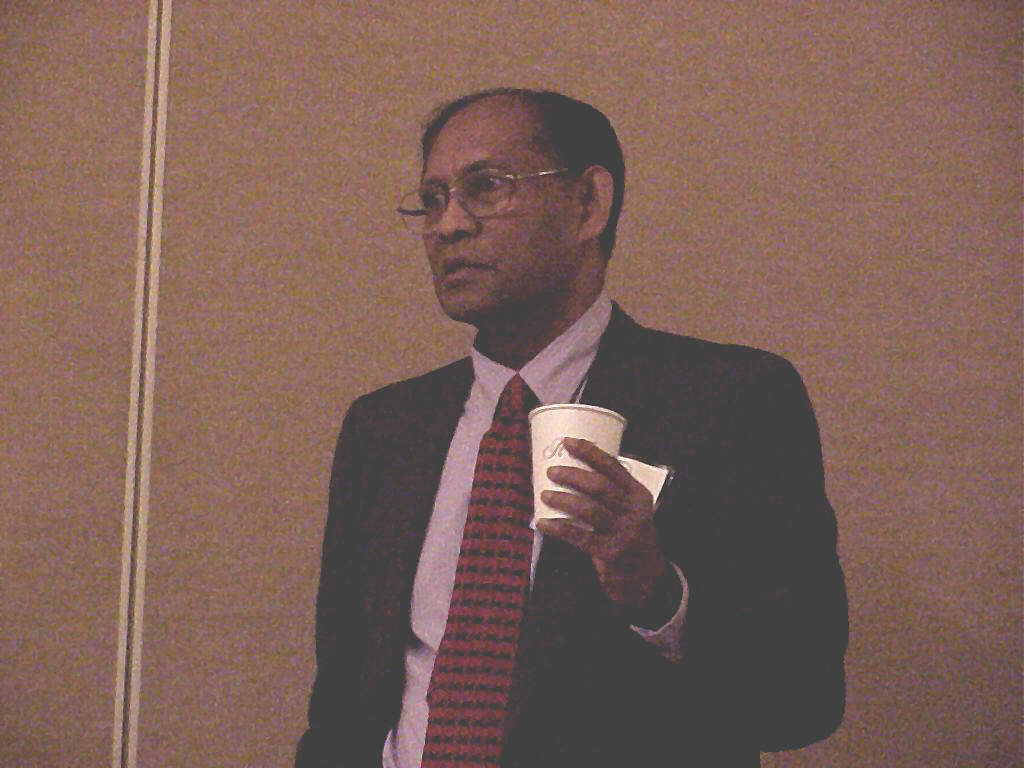
Wednesday, November 08, 2006

The Mongolian Connection


What is the connection between Abdul Razak Abdullah Baginda (above),
Executive Director of the Malaysian Strategic Research Centre, with...


...Altantuya Shaariibuu @ Aminah Abdullah?

Abdul Razak Abdullah Baginda, the Executive Director of the Malaysian Strategic Research Centre, is a graduate of King's College, University of London. He was previously the Head of Strategic Studies and International Relations at the Armed Forces Defence College. The former lecturer has written books on politics, economics, defence and international relations and is completing his doctorate at Oxford University. He is a member of the World Economic Forum's (Davos) Global Leaders for Tomorrow as well as a member of the London-based International Institute for Strategic Studies. Razak, 46, is married to former magistrate Mazlinda Makhzan with whom he has a 19-year-old daughter and is the son of National Welfare and Social Development Council chairman Prof Datuk Dr Abdullah Malim Baginda.

Malaysian Strategic Research Centre (MSRC)
10th Floor, Bangunan Getah Asli
148 Jalan Ampang
50450 Kuala Lumpur
Malaysia
Tel: 03-2163 6086/6089 Public Relations Manager: Ms Frida Murtisari
Fax: 03-2163 6087
e-mail:milieu5787@yahoo.com

The MSRC was set up as an Independent institute in 1993 primarily to advance the understanding of Malaysia's domestic and international activities and its impact and ramifications on the region and the world and vice versa. The primary mission of MSRC is to enhance and promote knowledge in a number of areas, including socio-economics, education, business, politics, and security. As the nation strives to become a developed and industrialized country, its citizenry, too, must be adequately prepared, and knowledge, being a source of power, is one of the keys to success. As such, MSRC seeks to further enrich the quality of knowledge and information on Malaysia and its roles in the international arena.

Copyright 2003-2006 Azlan Adnan Legal Notice
Friday, November 03, 2006

Singlemost biggest regret

In 1976, I met Lord Louis Mountbatten (an uncle of Prince Philip, husband of Queen Elizabeth). Being a somewhat naive and straightforward young man, I was curious if this "super-hero" had a more human, personal side so I innocently asked him: "Sir, you've obviously led a successful life, being First Sea Lord (UK's head admiral) during World War II, Governor-General of India, etc but what would be your singlemost biggest regret in life?"

Without hesitation, he replied "To have permitted the partition of India."

A pregnant pause followed, almost unbearably long, before he changed the subject by asking me a question: "Where did you learn to speak such good English?" to which I promptly replied, tongue-firmly-in-cheek: "We get Dallas on TV in Malaysia, you know!"

Well, that broke the ice.

Copyright 2003-2006 Azlan Adnan Legal Notice

Saturday, October 28, 2006

Animal Riddles

(with many thanks to Charmaine for a bit of risque Aussie humour)

Q: What do you get if you put a donkey in water?
A wet ass

Q: What do you get if you put a chicken in the freezer?
A stiff cock

Q: What do you get if you put a cat in a milk pan?
A contented pussy

Copyright 2003-2006 Azlan Adnan Legal Notice

Zakaria Kurang Ajar

The news that Port Klang assemblyman, Haji Zakaria Mat Deros, is to be imposed a RM24,000 fine for building his 4-storey palace without planning permission is welcomed but does not go far enough.

The MB of Selangor has also urged him to resign his post as a Majlis Perbandaran Klang Councillor or face the sack. Prime Minister Datuk Seri Abdullah Ahmad Badawi said the people were unhappy with what had happened and this reflected badly on the ruling party and government.

"Society cannot accept such offences committed by an elected representative and action must be taken against him (Zakaria)," Abdullah said.

I think this does not go far enough. The Sultan of Selangor should strip Zakaria of his datukship.

Zakaria had the audacity to refuse to go to the Palace after being summoned by HRH the Sultan to face a royal rebuking over his corruption, abuse of public position and arrogance charges.

Zakaria had used his position as a Majlis Perbandaran Klang Councillor to demolish a rival's satay stall as it was doing better than his, which doesn't have a TOL (Temporary Occupation Licence) even.

Idiots like Zakaria have no place in Malaysia. Tell him what you think of his antics:

Y.B. Dato' Haji Zainal @ Zakaria bin Mat Deros, DSSA, AMN, PJK, JP
Tingkat 1, Bangunan UMNO Bahagian Klang
Jalan Sentul KM 5
Persiaran Raja Muda Musa
42000 Pelabuhan Klang
Selangor, Malaysia
E-Mel : datozakaria@mpklang.gov.my
Tel : 03-3165 4121
H/P: 019-332 4504

Copyright 2003-2006 Azlan Adnan Legal Notice

Tuesday, October 24, 2006

Train defecator caught by police


Police have released a CCTV image of the suspect
Bonney Eberndu, 36, a thoroughly disgusting black piece of shit

British Transport Police have arrested a man suspected of defecating in trains across south-east England over the past three months, causing damage costing more than £20,000 to repair.

Bonney Eberndu, 36, of no fixed address, was arrested at Camberwell Green bus garage, in south-east London. He has struck on at least 22 trains since August.

He waits until he is alone before committing the offence, smearing excrement inside carriages.

"This is a serious public health issue as well as being exceptionally anti-social..." said Detective Constable Donna Fox. She said his offences had resulted in many carriages being taken out of service, causing disruptions, cancellations and serious inconvenience to the travelling public.

Different times
"There is no particular pattern as to when he appears," said Ms Fox.

"He travels to various areas and at different times of the day and different days of the week.

"On at least one occasion CCTV footage shows the man being disturbed by a passenger walking through a train.

Copyright 2003-2006 Azlan Adnan Legal Notice

Aid for alpacas


Alpacas have been raised in the Andes region for centuries. Docile and easy to domesticate, their wool is highly-prized by fashion designers.

For centuries, the alpaca has sustained the indigenous people of the Andean highlands in Peru, Bolivia and northern Chile.

The animal has become a symbol of this snow-capped region, but farmers in Peru are concerned that wool quality is declining and fear that the genetic pool of the world's largest alpaca industry may deteriorate dramatically. More...

Copyright 2003-2006 Azlan Adnan Legal Notice

Fancy a Banana Guard?


Does your banana need protection?
Whatever will they think of next?

Copyright 2003-2006 Azlan Adnan Legal Notice

Monday, October 23, 2006

SAMBAL 101

To: Azlan Adnan
Subject: Sambal belacan tomato
Message: Er, how exactly do you make that? Do you just add tomatoes when you're frying the sambal or is there something more to it?


In response to the above inquiry, which denotes a lack of understanding of the salient features of sambals, I have decided to give this SAMBAL 101 lecture.

Sambals (what the Hispanics would call SALSA, I guess) can be broadly divided into two categories ~ the SAMBAL TUMIS and the non-tumis. Tumis means saute or frying lightly. Sambal belacan is in the latter category and therefore DOES NOT INVOLVE ANY FRYING. If you "you just add tomatoes when you're frying the sambal" as the inquirer had suggested, you will just end up with one big mess.

Having said that, however, please don't let "big messess" put you off. Some of the most unaesthetically pleasing messes are quite delicious. For example, one day my mom asked my goblok Indon maid to pound the spices and then add to the limpa (spleen and other assorted offal) before frying. The goblok pounded the limpa together with the spices and then fried the whole mess. Looks a disgusting mess but was delicious. But I digress...

To make sambal belacan, you generally need chillies (big red ones, green ones, chilli padi or whatever you fancy ~ there is no hard and fast rule ~ I come from the whatever-I-can-lay-my-hands-on school of cooking), bawang merah (shallots), some sugar (like a teaspoon or tablespoon, depending on your taste), pinch of salt, maybe some garlic, some people add MSG but I generally do not use any MSG in my cooking at all; some lime (limau nipis or calamansi) juice but lemon juice, asam jawa (tamarind) juice or even limau kasturi would work (I guess some vinegar or grapefruit juice would do at a pinch) and of course some BELACAN.

You can try to make it without the belacan if you can't find any, but then it won't be sambal BELACAN, would it?

THIS IS WHAT YOU DO:
Get a frying pan or some tin foil. In my childhood days, we used to cut out the tin foil seal from 2 kg Milo tins for this purpose. Heat up the belacan. No oil, nothing. Just heat it up to get some "fragrance" emanating. This is best done while you're right beside it. Don't heat up the belacan and bugger off somewhere. One Thai university flatmate once did that only to discover that, in his absence, a Mat Salleh flatmate had thrown a fire blanket over it and sprayed the kitchen with half the contents of a fire extinguisher. Mat Salleh assumed, from the "pong," that something was on fire and took prompt remedial action.

You don't have to use excessive heat. Stop when you feel it smells right. Then, if you have a lesong, pound the belacan with the rest of the solid ingredients. Add the lime juice (or alternatives) at the end to adjust the acidity and consistency. Its not quite the same when you use a blender.

VARIATIONS
If you wanna make SAMBAL BELACAN TOMATO, add TOMATO to the above before adding the lime juice. Just be aware that tomatoes have some level of acidity and moisture, so you don't have to add so much lime juice.

If you wanna make SAMBAL BELACAN STRAWBERRY, add sour strawberries to the above before adding the lime juice. Just be aware that sour strawberries have some level of acidity and moisture, so you don't have to add so much lime juice. This recipe is for what to do when you've bought a punnet of strawberries and they turn out to be sour. Instead of chucking them out, make SAMBAL BELACAN STRAWBERRY. If they are sweet, just eat them, no need to go to the trouble of making it into a sambal belacan.

If you wanna make SAMBAL BELACAN MANGA/BINJAI/WHATEVER, add MANGA/BINJAI/WHATEVER to the above before adding the lime juice. Just be aware that of the acidity and moisture levels, so adjust the lime juice accordingly.

You can eat sambal belacan with just about any raw vegetable. I tried it and it goes down well with carrots, cabbage, lettuce, asparagus (yes, raw), aubergines, sour green apples (Brambleys and Granny Smith, I've been told they work a treat with Russets but I've never tried it myself).

Some vegetables you have to blanch first. (This involves dipping them into a pot of boiling water from anywhere between a few seconds to a minute.) These include okra (ladies fingers), jantung pisang, and what have you.

If you can find ulam wherever you are, great. If not, experiment!

SAMBAL TUMIS
As the name implies, this involves "tumis-ing" which is to saute, or lightly fry. You will need some cooking oil, chilli powder, tumeric powder, salt, sugar. If I do have to tumis, I like to use Alagappa's dhall "sambar" powder, which already has a nice mix of chilli, tumeric, jintan manis and jintan putih powders. However, as I belong to the why-bother-if-it takes-longer-to-cook-than-to-eat-it school of cooking, I generally don't bother with making sambal tumis. The most common sambal tumis is SAMBAL TUMIS IKAN BILIS which is commonly eaten with nasi lemak. You can also eat it with pisang goreng as well and if you down it with some robust red French wine, it works a treat. I recommend a Merlot or a Bordeaux.

You can check out some recipes of mine at:
www.lulu.com/azlan
as well as photographs and short stories. Proceeds from sales of most of the items go to either the Azlan Adnan Education Fund or my Humanitarian Fund.

Enjoy!

Copyright 2003-2006 Azlan Adnan Legal Notice

Saturday, October 21, 2006

Healthcare in Myanmar

Introduction
Myanmar shares borders with Thailand, the Lao People's Democratic Republic, China, Bangladesh and India. Estimates for 2004 indicated there were 50.1 million people living in Myanmar which is one of the least densely populated countries in Asia. The rugged, forested portion of its terrain is still only lightly settled; it is a land of villages, with only around 29.3 per cent of the population living in urban areas (2003). The annual population growth rate is high by world standards, but is about average for South East Asia. Myanmar has a centrally planned, developing economy that is largely nationalised and is based principally upon agriculture and trade. The GNP per capita, however, remains one of the lowest in the world.

Healthcare
Myanmar's hospitals have long queues of patients, many with the classic diseases of poverty such as tuberculosis, malaria and water-borne illnesses, but are often unable to give them the treatment they need, because medications are either too expensive or impossible to obtain.

Myanmar's military junta has been ruling the country for four decades, during which time many other South East Asian nations have seen dramatic improvements in their economies, government services and standards of living.

The World Health Organization estimates that Myanmar spends US$10 per person per year on healthcare, compared with its neighbours Thailand and Malaysia, which spend US$160 and US$218 respectively. One NGO estimated that the actual Burmese figure was even lower - more like US$0.50. As a result, an estimated 150,000 Burmese children under the age of five die every year of malaria, acute respiratory infections and diarrhoea.

HIV/AIDS
Myanmar has one of the most serious HIV/AIDS epidemics in South East Asia. The Ministry of Health estimates that 338,911 adults aged 15-49 years old were living with HIV in September 2004, of which 28.6 per cent were women, indicating a total prevalence rate of 1.3 per cent. UNAids estimates that 360,000 Burmese people are currently living with the disease - and other organisations put the figure as high as 600,000. With national estimated HIV prevalence of between 0.6 per cent and 2.2 per cent, Myanmar is experiencing a generalised epidemic, considered one of the most serious in Asia.

Officially reported AIDS cases attribute 30 per cent to intravenous drug use and 68 per cent to heterosexual transmission. Intravenous drug users have exceptionally high rates of HIV infection, with rates among drug users tested in Yangon and Mandalay in 2003 ranging from 50 per cent to 85 per cent.

Source: WHO: Summary country profile for HIV/AIDS treatment scale-up (June 2005) & WHO HIV/AIDS in Asia and the Pacific Region 2003

Copyright 2003-2006 Azlan Adnan Legal Notice

US to accept Myanmar refugees


A 22-year-old Karen hill tribe woman cleans the ring around the neck of her mother at a village near Mae Hong Son province, north of Bangkok in this picture taken September 7, 2006. For the past two decades, hundreds of ethnic Padaung "long-neck" people from military-ruled Myanmar have enjoyed relative peace and security as refugees in the hills of northern Thailand.

US Secretary of State Condoleezza Rice has waived a provision of the Patriot Act to allow thousands of refugees from Myanmar's Chin state to be considered for asylum in the US.

Strict laws passed after the 11 September 2001 attacks prevent people who have provided "material support" to armed groups from resettling in the US. Many Chin refugees had provided such help to rebel groups such as the Chin National Front and Chin National Army. The majority of Chin refugees from Burma live in camps in Malaysia, Thailand and India.

Washington has already issued similar exemptions for Burma's Karen people, who were in a similar situation.

"Exercising the exemption authority allows the US to resume significant processing of the thousands of extremely vulnerable ethnic Chin refugees living in Malaysia and elsewhere," the US State Department said in a statement. But it added that the applicants must meet other eligibility requirements for resettlement, "including that they pose no danger to the safety and security of the United States."

Copyright 2003-2006 Azlan Adnan Legal Notice

Thursday, October 19, 2006

George W. Bosch & the Loose Screw


"Ok, where's that loose screw people keep talking about?"
~ The ever-obliging-for-the-camera George W. Bosch about to
give his North Korean counterpart Kim Jong-il a good screwing...

Copyright 2003-2006 Azlan Adnan Legal Notice

Tuesday, October 10, 2006

The most haunting image of the horror of war since Goya


Kim Phuc on fire, (detail)

On the morning of June 8, 1972, an American air force plane dropped several thin 120-gallon canisters of Dow-brand Napalm B onto the Vietnamese village of Trang Bang.


Kim Phuc on fire, (full frame)

Kim Phuc was there, and she was set on fire. Napalm covered her back, it burned through her clothes, it burned deep into a third of her body. She was nine-years-old.

The photograph showing excruciating pain in the face of death has become a photographic icon, an anti-war rallying point and a symbol of hope. The photograph rightly stands among a few honorable and memorable images of the last 150 years of photojournalism. The London "Observer" Sunday paper calls the photograph "the most haunting image of the horror of war since Goya."


Kim Phuc's brother, Phan Thanh Tam (right), thirty years on

Kim Phuc's brother, Phan Thanh Tam - the one with his mouth in a crescent of agony in the famed photograph that encapsulated the war's horrors - is now 41 (in 2002) and has a paunch. He runs an open-air coffee shack on the very spot where a South Vietnamese bomb hit. Tam says he still has nightmares about the incident.

Biography
Phan Th? Kim Phúc known as Kim Phuc (born 1963) was the subject of a famous photograph from the Vietnam war. The picture shows her at about age nine running naked after being severely burned on her back by a napalm attack.

Kim Phúc was a resident of the village of Trang Bang, Vietnam. On June 8, 1972, South Vietnamese planes dropped a napalm bomb on Trang Bang, which was under attack from and occupied by Viet Cong forces. She joined a group of civilians and ARVN soldiers fleeing from the Cao Dai Temple located in the village along the road to safe ARVN positions. A South Vietnamese VNAF pilot mistook the group as a threat and diverted to attack it.

Along with other villagers two brothers and two cousins were also injured. Associated Press photographer Huynh Cong "Nick" Út earned a Pulitzer Prize for the photograph. The image of her running blistered and naked (she had torn off all her burning clothes) amidst the chaotic background became one of the most remembered images of the Vietnam War.

In an interview many years later, she remembers yelling, "Nong qua! Nong qua!" (Too hot! Too hot!) in the picture. After taking the photograph, Út promptly took Kim Phúc to a hospital in Saigon where it was determined that her burns were so severe that she would not survive. However, after a 14-month hospital stay and 17 surgical procedures, she returned home. Út continued to visit her until the fall of Saigon three years later when he was evacuated.

When she was an adult, due to pressure from people to use her as an anti-war symbol, she requested permission from the Vietnam government to go to Cuba to resume her studies. By this time, she had converted from her family's religion of Cao Dai to Christianity. Pham Van Dong, the then Prime Minister of Vietnam, became a friend and patron of hers.

After receiving permission, she then moved to Cuba, and met her future husband, Bui Huy Tuan. In 1989 Út went to Cuba to meet her and her fiance. Kim Phuc and Bui Huy Tuan married and, in 1992, they went on a honeymoon. During an airplane refueling in Gander, Newfoundland, Canada, they got off the plane and defected to Canada. They now live in Toronto and have two children. In 1996, she again met the surgeons who saved her life.

Recently released audio tapes of then-president Richard Nixon in conversation with his chief of staff, H. R. Haldeman, show that Nixon doubted the veracity of the photograph, musing whether it may have been "fixed." Following the release of this tape, Út commented:

"Even though it has become one of the most memorable images of the twentieth century, President Nixon once doubted the authenticity of my photograph when he saw it in the papers on June 12, 1972... The picture for me and unquestionably for many others could not have been more real. The photo was as authentic as the Vietnam war itself. The horror of the Vietnam war recorded by me did not have to be fixed. That terrified little girl is still alive today and has become an eloquent testimony to the authenticity of that photo. That moment thirty years ago will be one Kim Phuc and I will never forget. It has ultimately changed both our lives" (from program booklet for Humanist Art/Symbolic Sites: An Art Forum for the 21st Century).

Film footage of Kim Phúc running from her village was shot by British news cameraman Alan Downes, then on assignment for ITN.

Vietnam Memorial Speech
In 1996, she gave a speech at the United States Vietnam Veterans Memorial on Veterans Day. During the speech she said that we cannot change the past but can work for a peaceful future. After the speech, Vietnam war veteran John Plummer talked to some of his old buddies and got them to ask if she would like to meet him, for he stated that he was the one who ordered the bombing. She accepted and they met briefly and Kim forgave Plummer.

The news story of Kim Phuc forgiving the American who ordered the bombing was reported on a special report by ABC. Some parties have denied that Plummer ordered the bombing, but according to the Washington Post, December 19, 1997, Plummer says he received a call from an American military adviser working with a South Vietnamese army unit, who requested an air strike on the village of Trang Bang. He relayed the request for a strike to U.S. Air Force personnel, who asked the South Vietnamese air force to launch it. Later, he saw the photo in Stars and Stripes, and recognized the bombing as the one he had requested.

To bolster his point, Plummer provided a copy of a Bronze Star citation, the authenticity of which was confirmed by U.S. Army officials, which details his responsibilities during that time. It notes that Plummer "assisted in the coordination of pre-planned and immediate tactical air strikes in the Military Region 3," which included Trang Bang. The citation adds that he helped coordinate 60 South Vietnamese air force air strikes between April 12 and June 16, 1972.


Phan Thi Kim Phuc in 2000

Honours
On November 10, 1997, Kim Phúc was named a UNESCO Goodwill Ambassador. On October 22, 2004, she was awarded an honorary Doctorate of Laws from York University in Toronto, Ontario, Canada for her work to aid child victims of war around the world. In 2004, she was awarded the Order of Ontario.

Copyright 2003-2006 Azlan Adnan Legal Notice